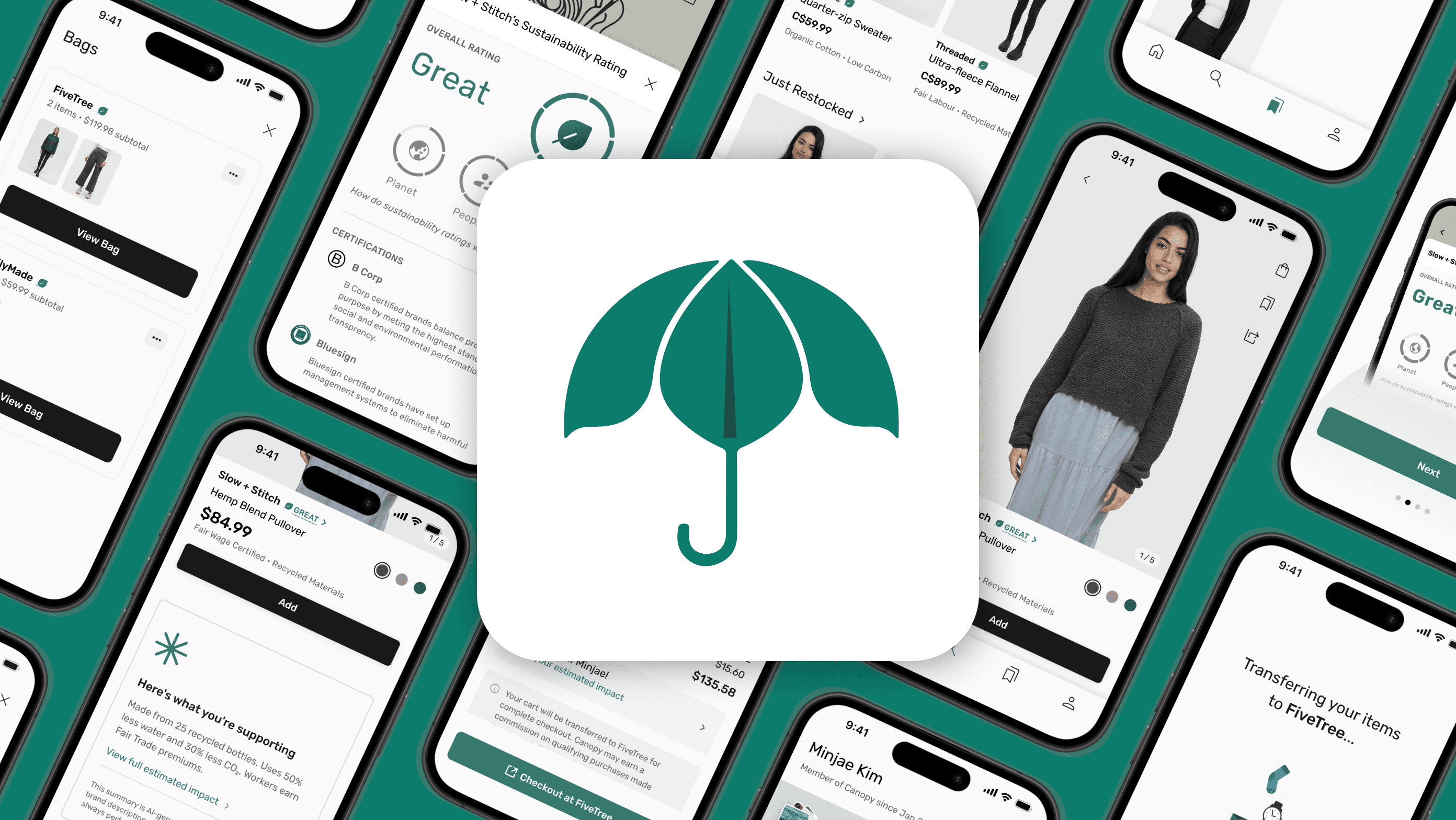
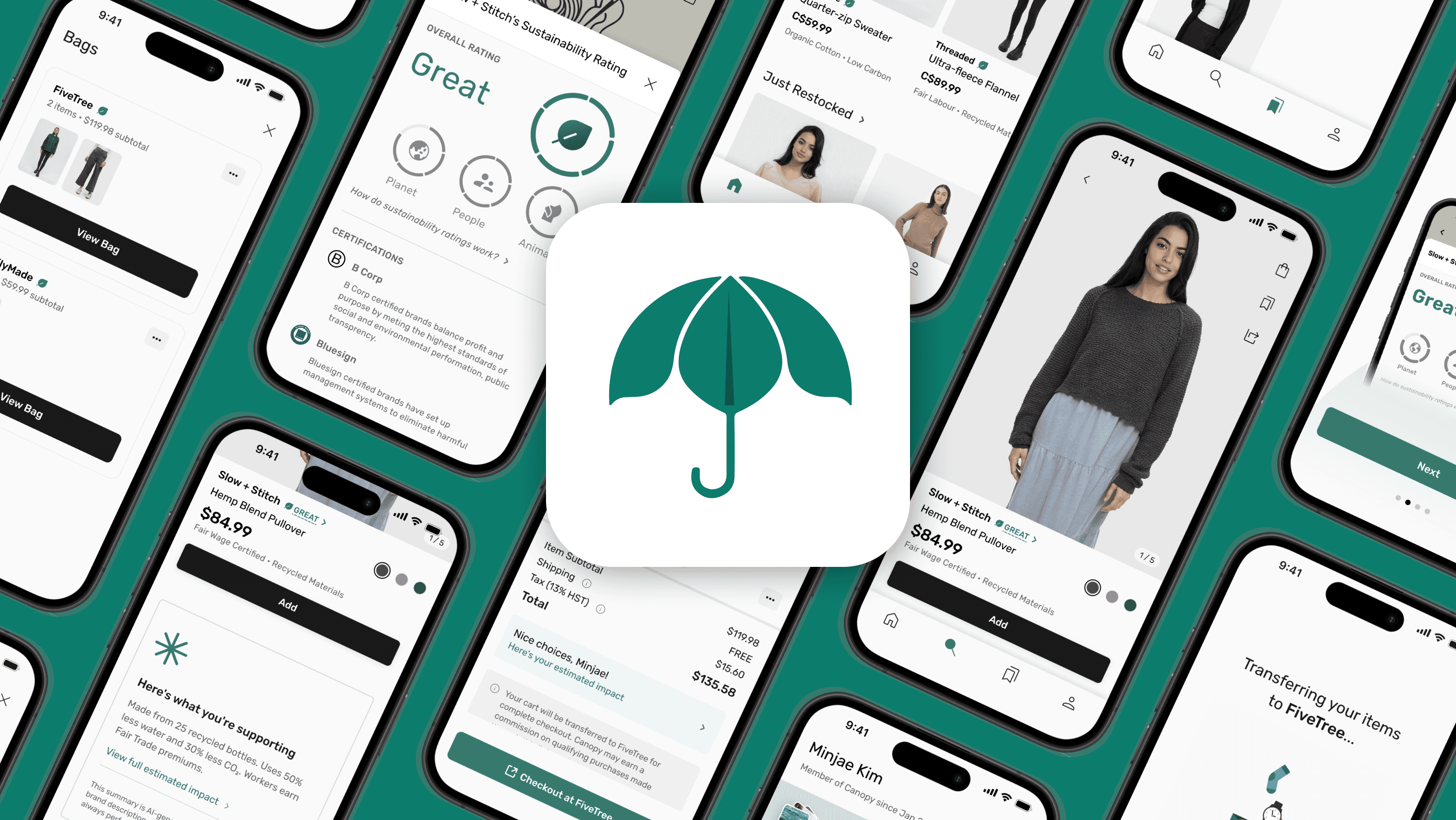
Canopy • COncept 2026
Ethical shopping made easy
Outcomes
95% Adoption Rate
Users who tested Canopy desired to use it to shop ethically.
4.7x Faster
Brand sustainability researching time (14 minutes -> 4 minutes)
Role
Product Designer
TImeline
Jan - Feb 2026
Skills
UI/UX Design, Product Strategy, User Testing, Prototyping, AI
At a glance
Shoppers want to make ethical choices, but greenwashing, vague certifications, and information overload get in the way. Canopy surfaces the sustainability data that was always buried in fine print and putting it front and centre, so you can shop without second-guessing yourself.
Outcomes
95% Adoption Rate
Nearly all users who tested Canopy desired to use it to shop ethically.
4.7x Faster
Brand sustainability researching process (14 minutes -> 4 minutes)
Problem
My friend Anna (huge shoutout <3), introduced me into purpose-driven ethical shopping. And I genuinely wanted to do it right!
But between the terms I didn't understand, the expensive prices, researching about the company, I was exhausted.
This got me thinking,
Do we compromise our values simply because doing the right thing is too much work?
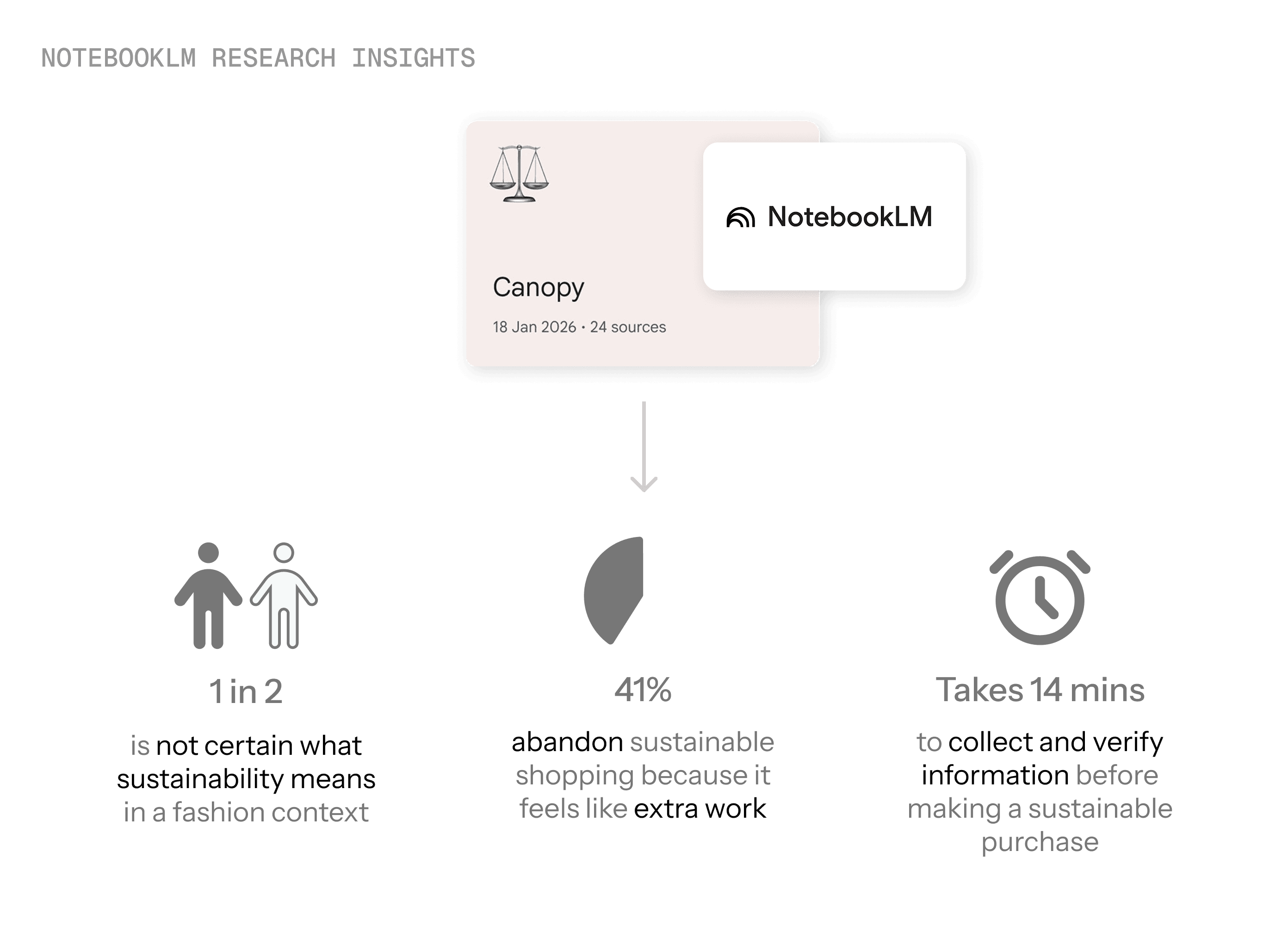
This research revealed that shoppers aren't disengaged, but are exhausted.
Competitive Analysis
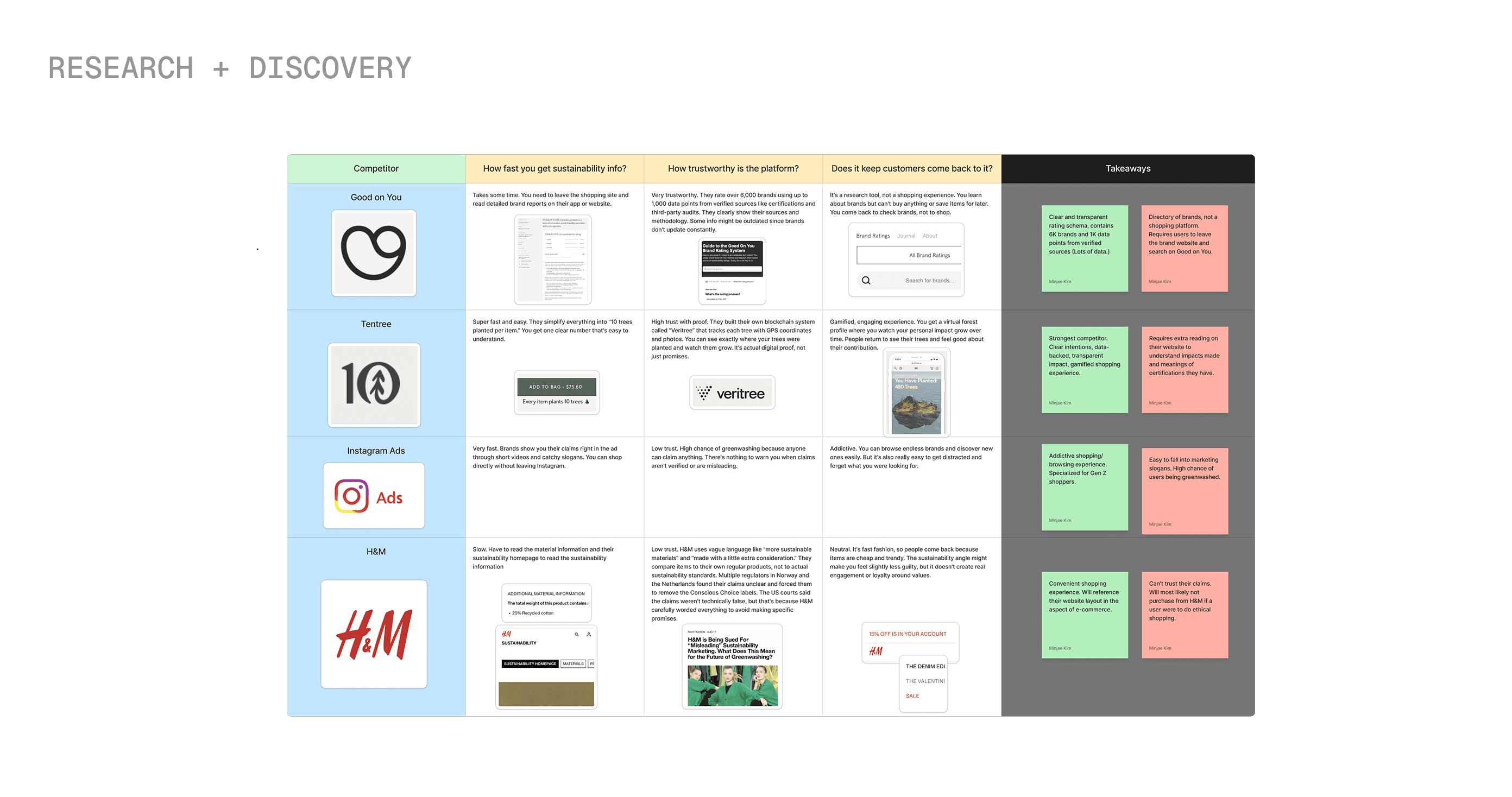
Good On You has the trusted data, but is not a platform.
Individual sustainable brands have the engagement, but not the brand variety.
Fast fashion brands have the convenience & variety, but not the credibility.
Opportunities & Threats
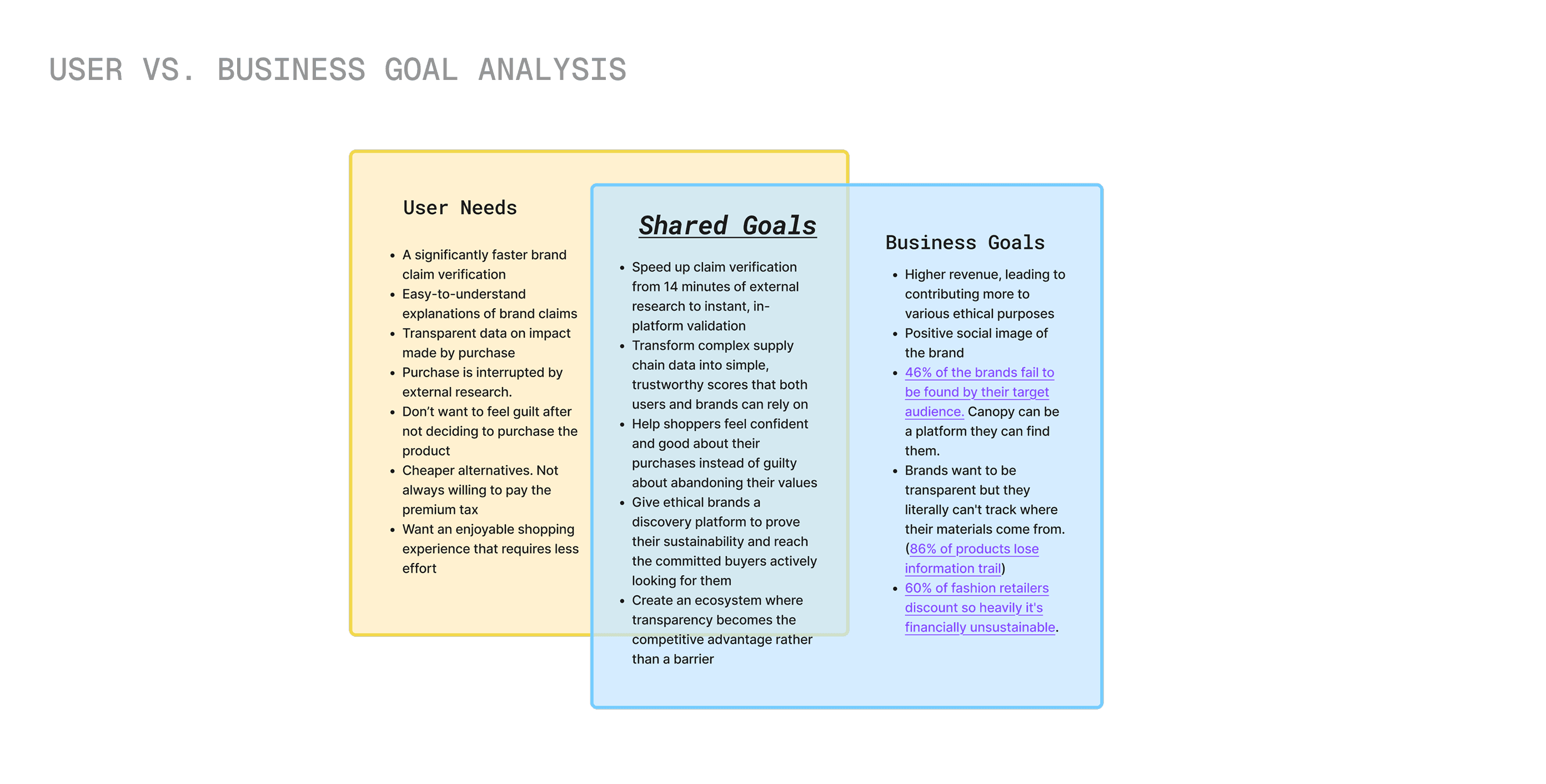
Research showed that 46% of ethical brands fail to be found by their target audience. Canopy can be the platform to achieve this!
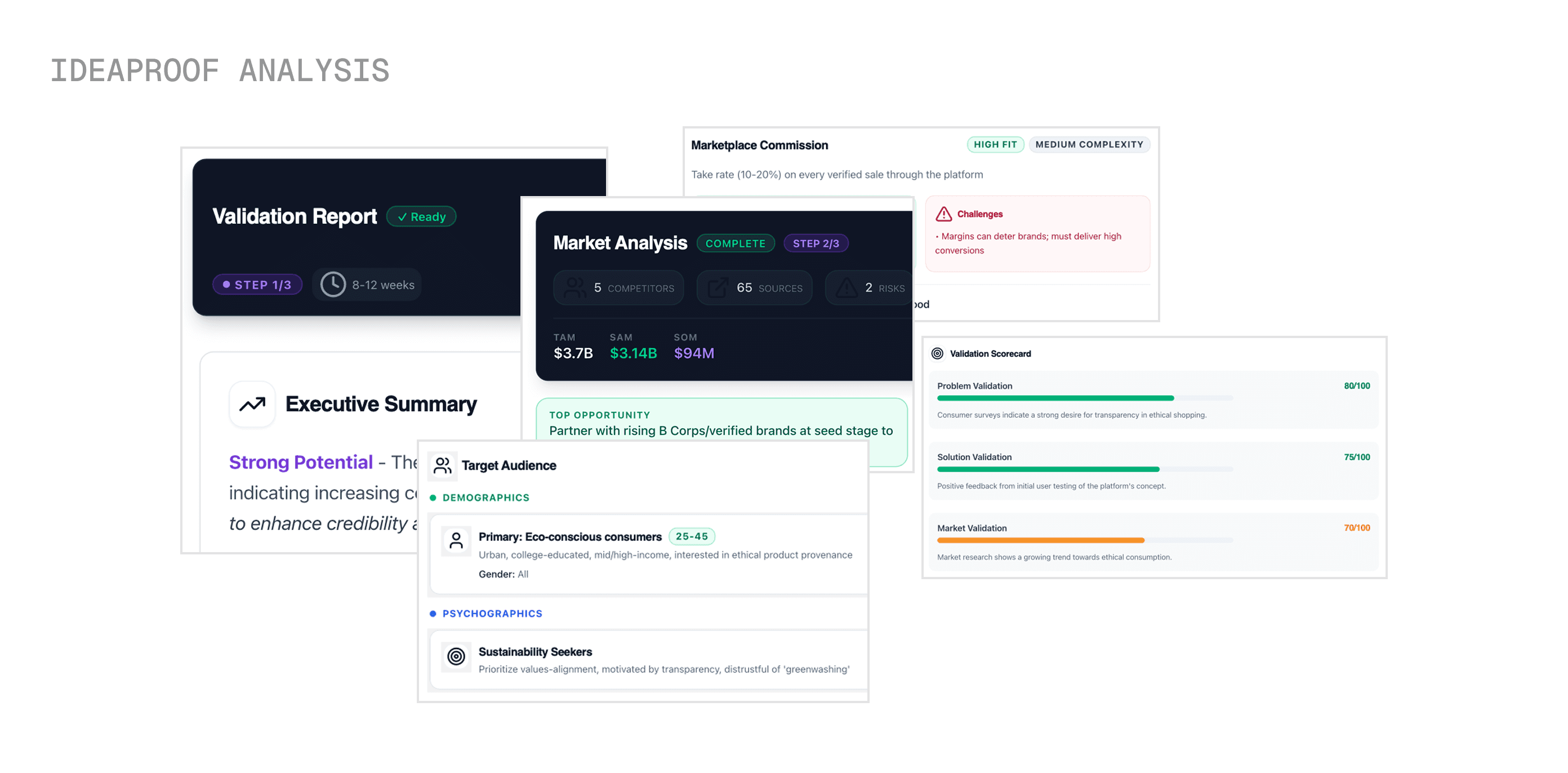
Analysis results were as follows.
Make it personal.
Allow users to shop for products that serve their personal values.
Scale through partnerships.
Sustainable brands have smaller inventories - expand by partnering with multiple brands.
Justify the premium price.
Sustainable items come with a premium price, and it's inevitable. Strategize solutions to around it.
Final Design
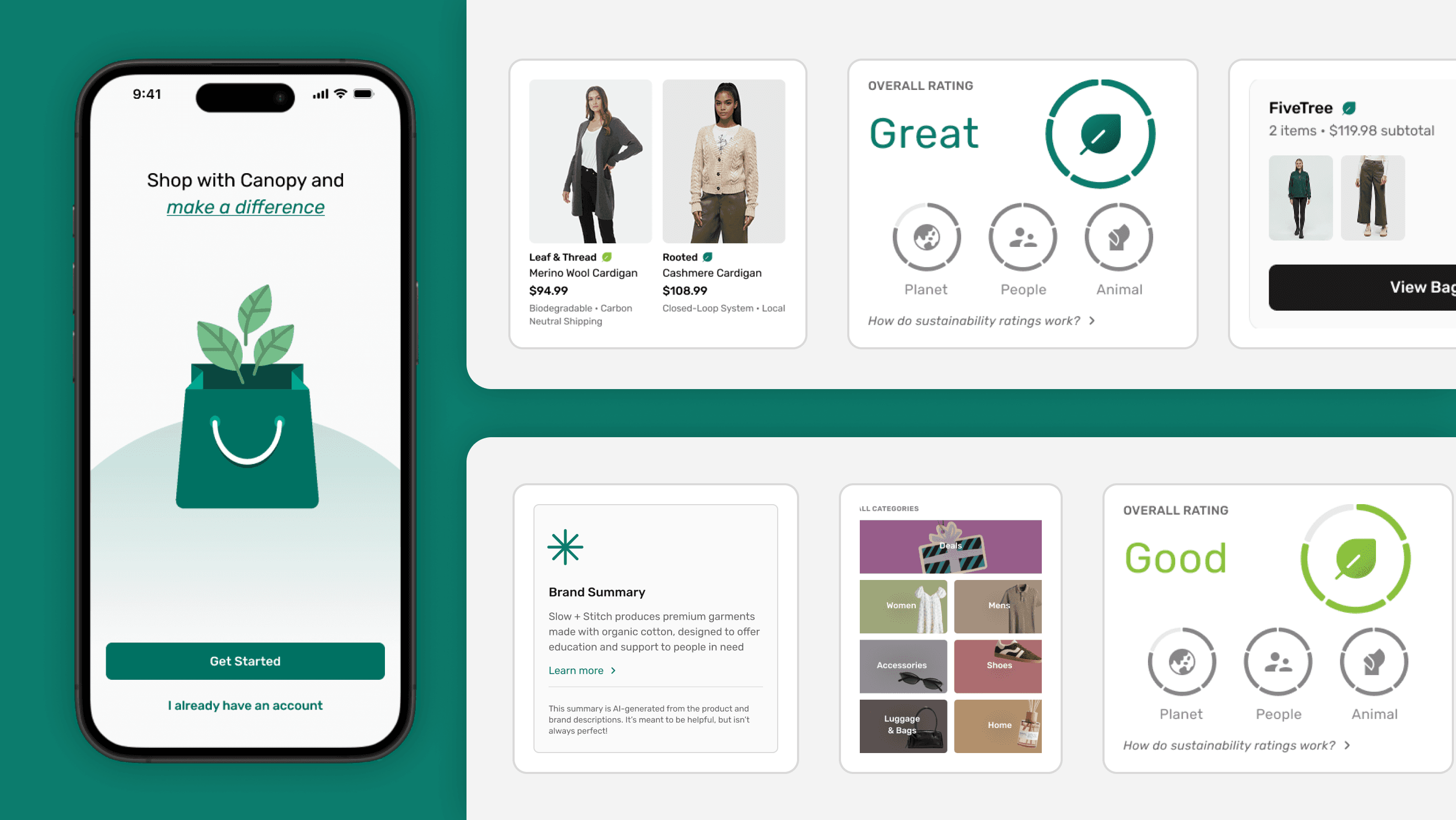
Shop products that match what you actually care about. Canopy handles the research, the sustainability ratings, and the checkout - so that doing the right thing finally feels effortless.
Discover products that directly align with your personal ethical values and priorities.
Access industry-leading sustainability data through a partnership with the world's #1 rating platform, Good On You.
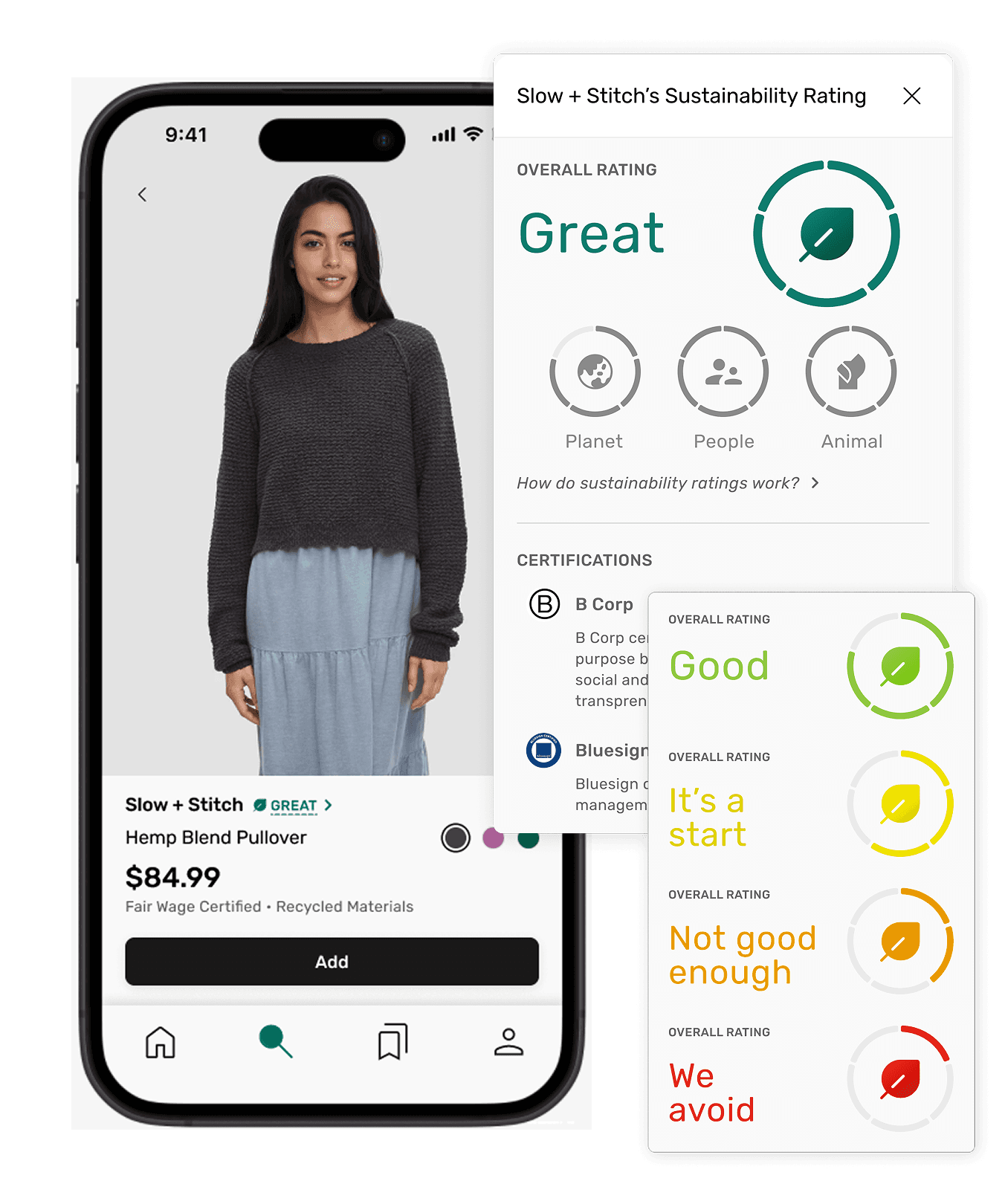
Experience a seamless transition that automatically transfers your Canopy cart to the brand's website.
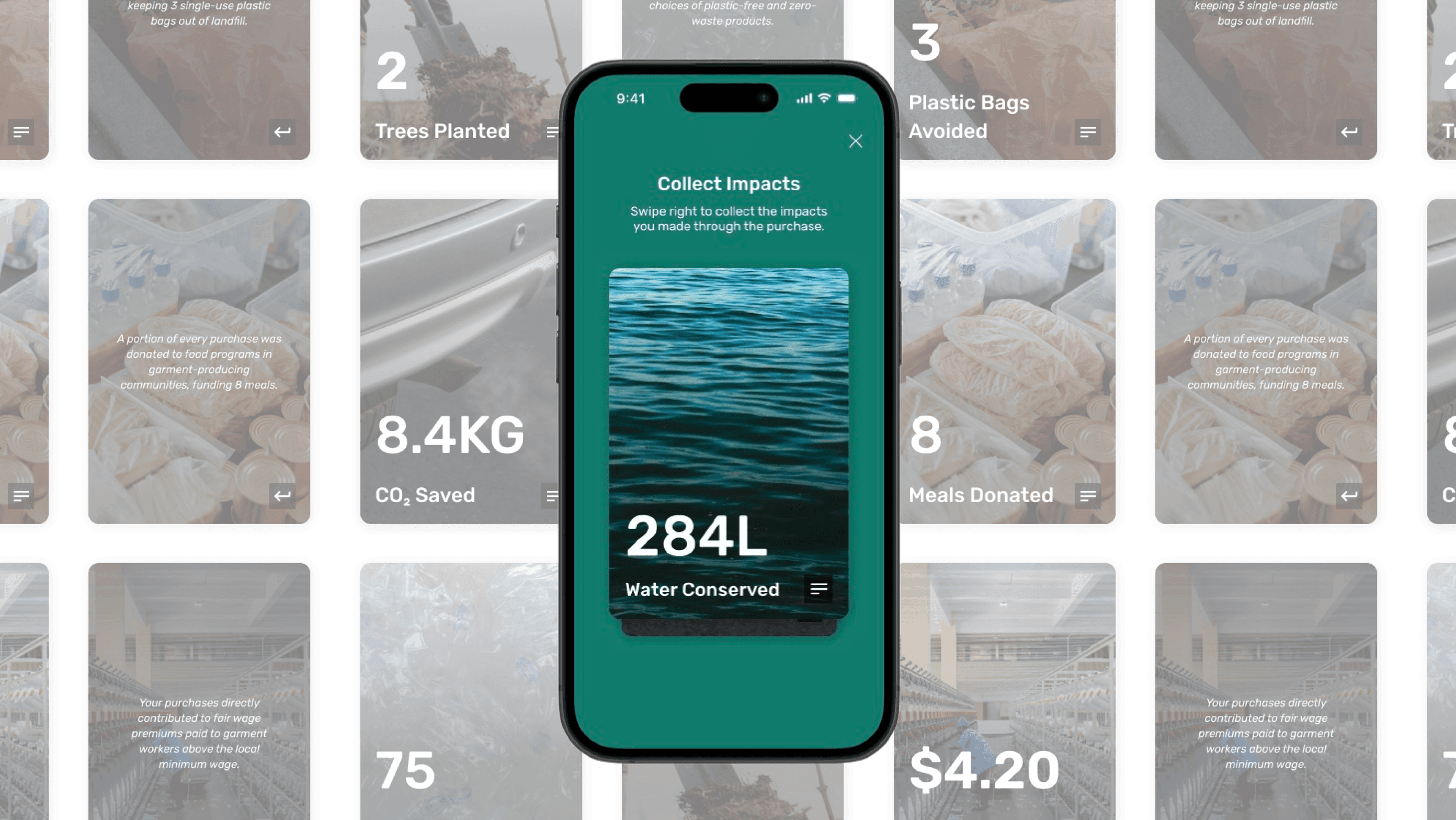
Collect and celebrate your ethical contributions with a personalized, gamified impact scorecard.
Get notified when your wishlisted items go on sale.
Skip the exhaustive research with clear, bite-sized summaries of what’s actually important.
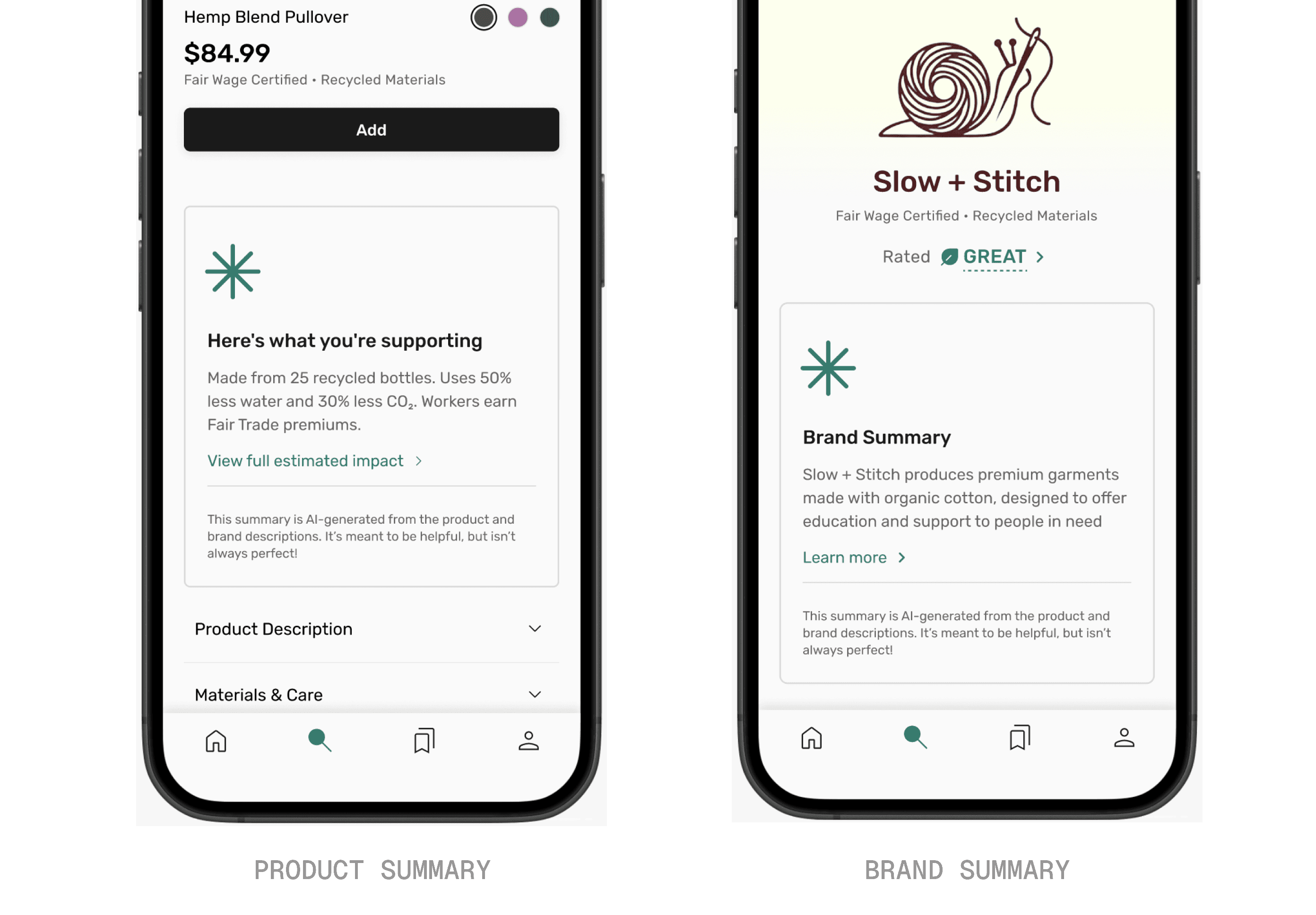
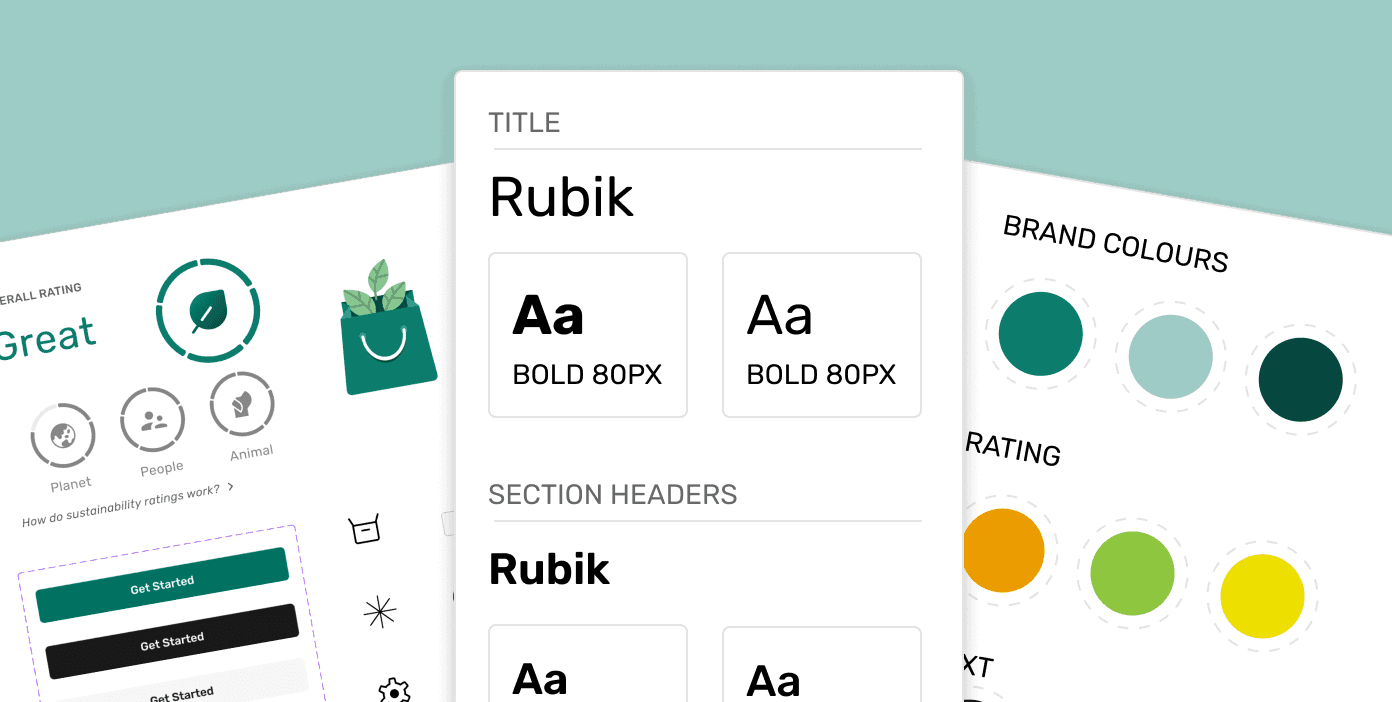
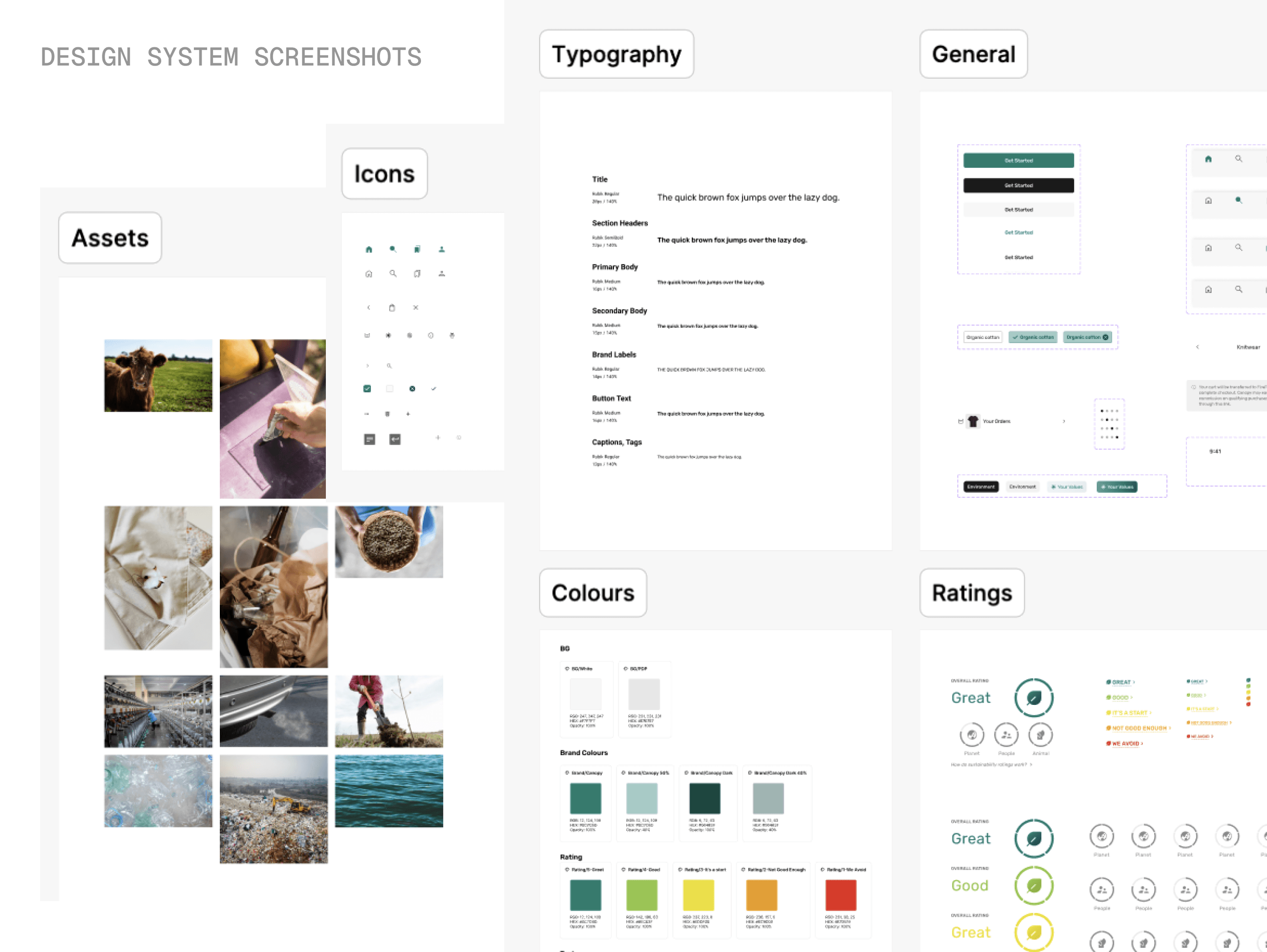
With reusable styles and patterns already in place, the design iteration process moved faster and stayed consistent throughout.
Design Iterations
After making low-fidelity prototypes of the solutions, I conducted a usability test to validate the concepts on 4 test users.
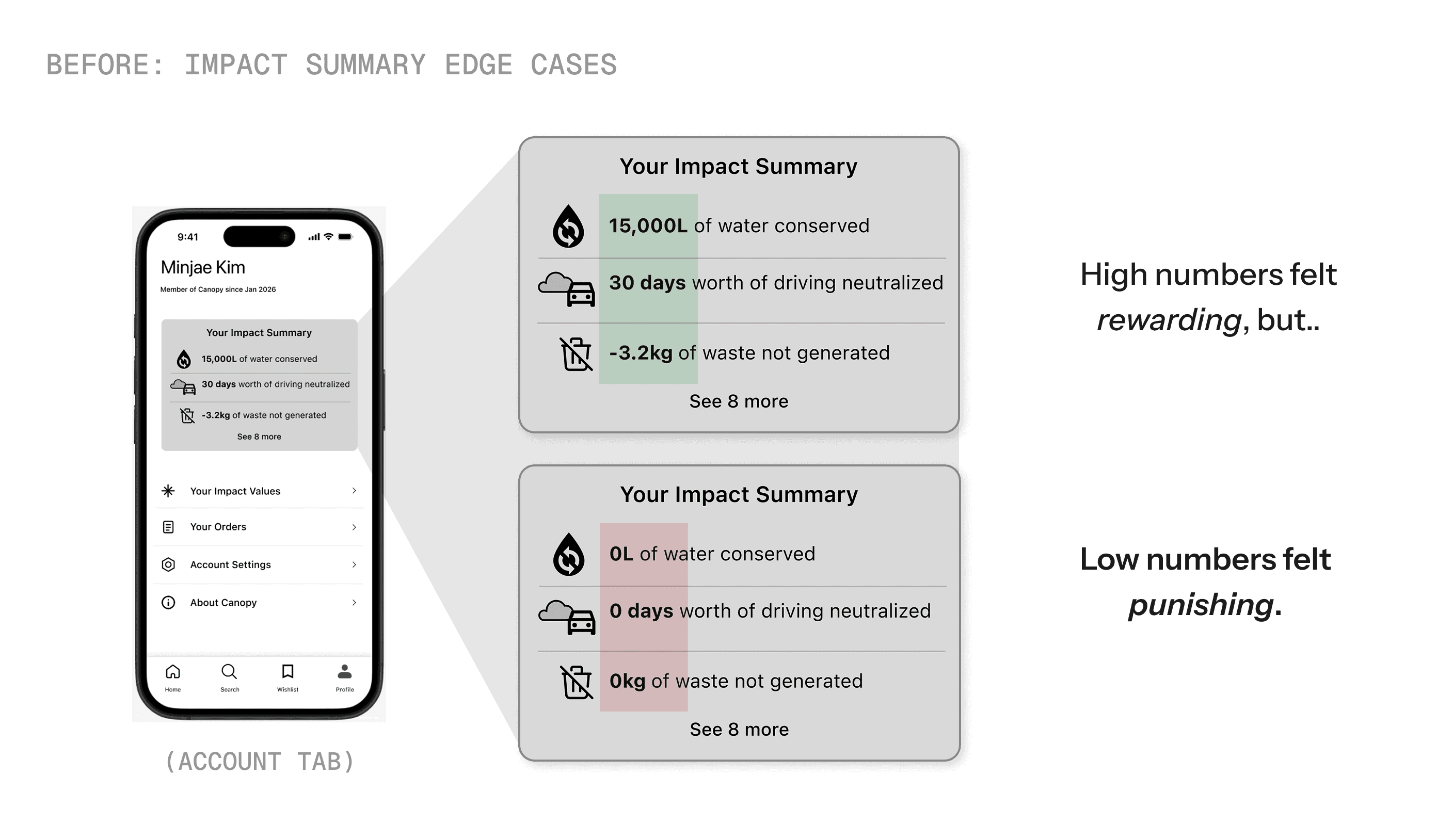
Research showed that empty "Your Impact summary" section felt like they aren't shopping "enough." Since ethical shopping is tied to identity, low numbers inadvertently created a sense of moral failure.
Solution: Shift from Monitoring to Celebration
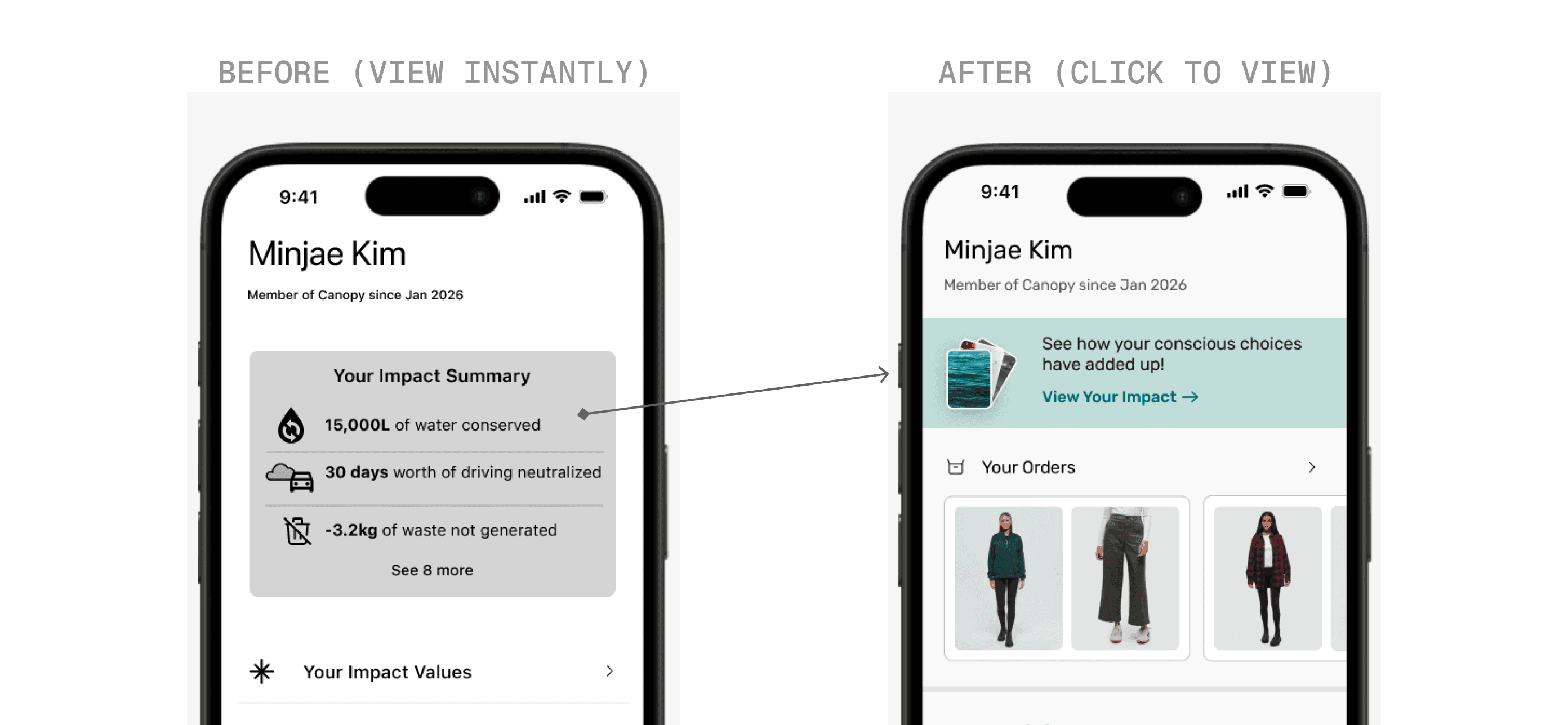
Impact stats are now housed in a "Show Impacts" banner, appearing only when the user is ready to engage.
Also, I introduced a "Collect Impact" feature. Users "collect" the impacts by swiping. By making the impact a reward to be collected after a purchase, I shifted the UX from a critique to a celebration.
+ "Collect Impacts" Feature
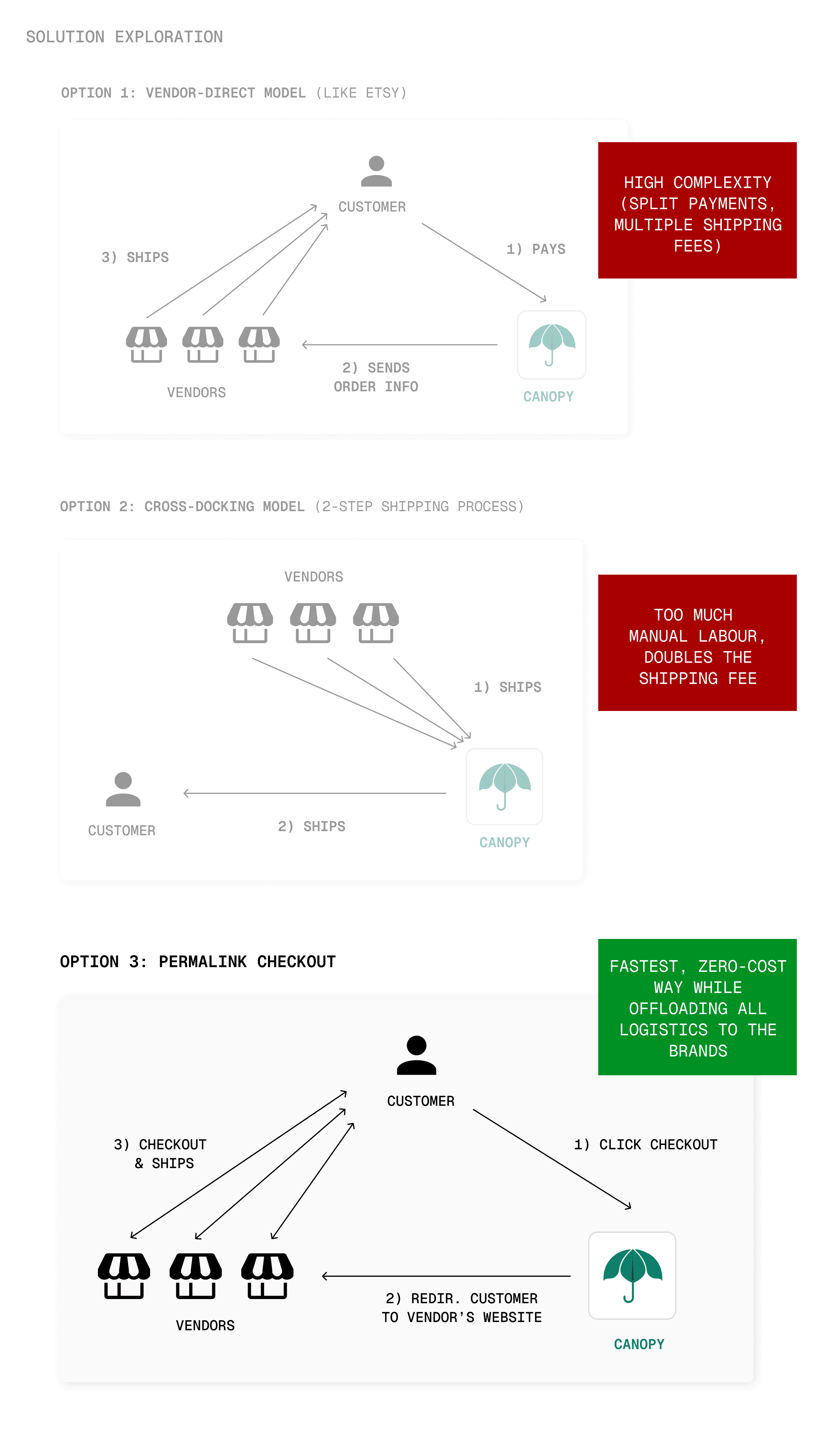
Challenge #2: Oh no, we'd need a warehouse for this.
One of the biggest points of realization - that the current concept of Canopy will require a physical warehouse, because it'll need to partner with various brands. This will be beyond the scope of our case study!
Solution: Use a "permalink" checkout system.
The permalink system uses direct-to-cart URLs to instantly transfer items in your Canopy Shopping Bag to the brand's checkout, pre-filling their cart automatically with the selections.
This eliminates physical warehousing, giving Canopy near-infinite inventory without traditional retail constraints!
However…
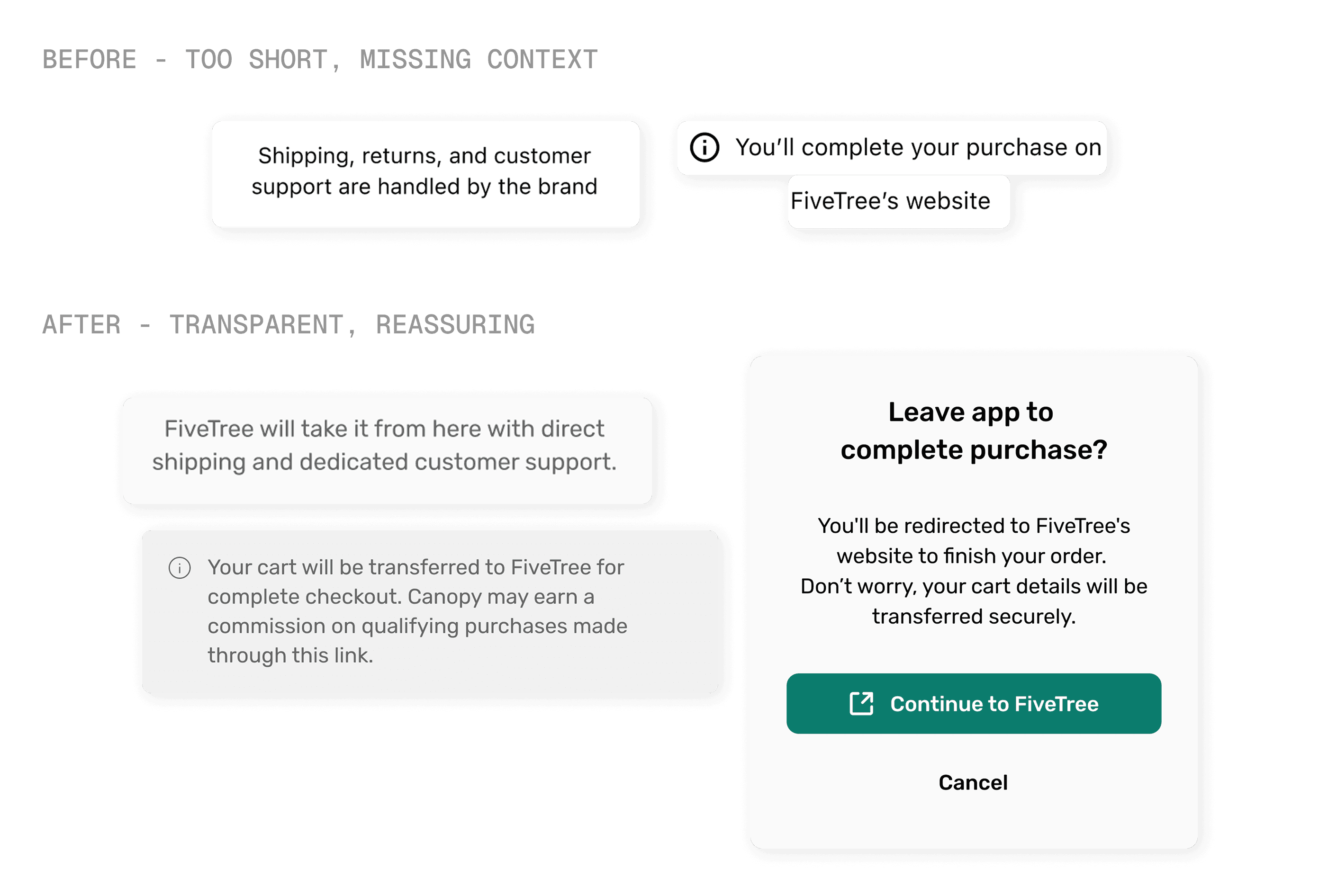
Challenge #2-1: But, 50% of users found the permalink concept confusing.
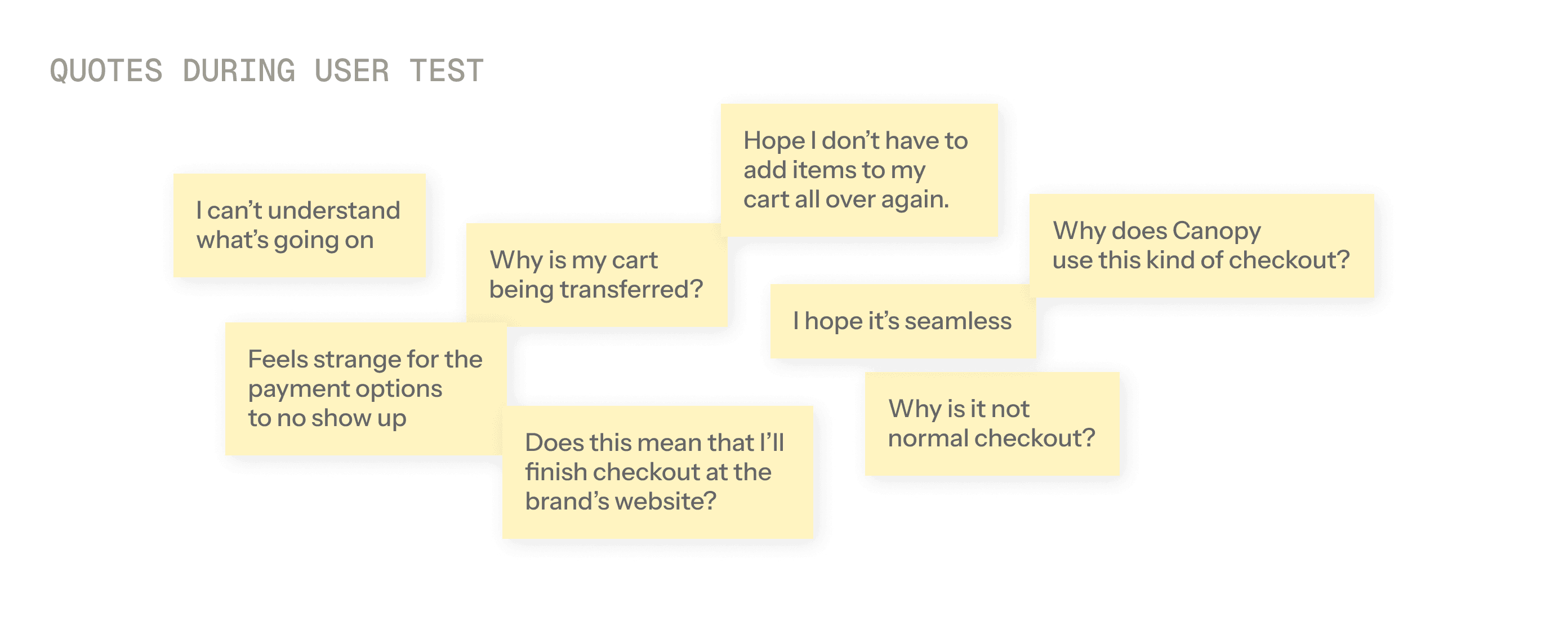
Solution: Onboard with visual guides & more descriptive checkout copy.
To ensure users felt comfortable being redirected, I added a screen to the onboarding process that demonstrates the transition process, and rewrote explanations at checkout to be clearer + more descriptive.
Challenge #3: Building a high-trust database from scratch will be expensive.
Credibility has a cost: 1,000+ data points per brand, engineering resources, and complex regulatory navigation. Too much $$$ overhead for an early-stage product!
Solution: Use the API of a distinguished brand sustainability rating platform — Good On You.
Good On You is the industry leader in brand sustainability ratings, providing transparent, data-driven scores for thousands of fashion brands.
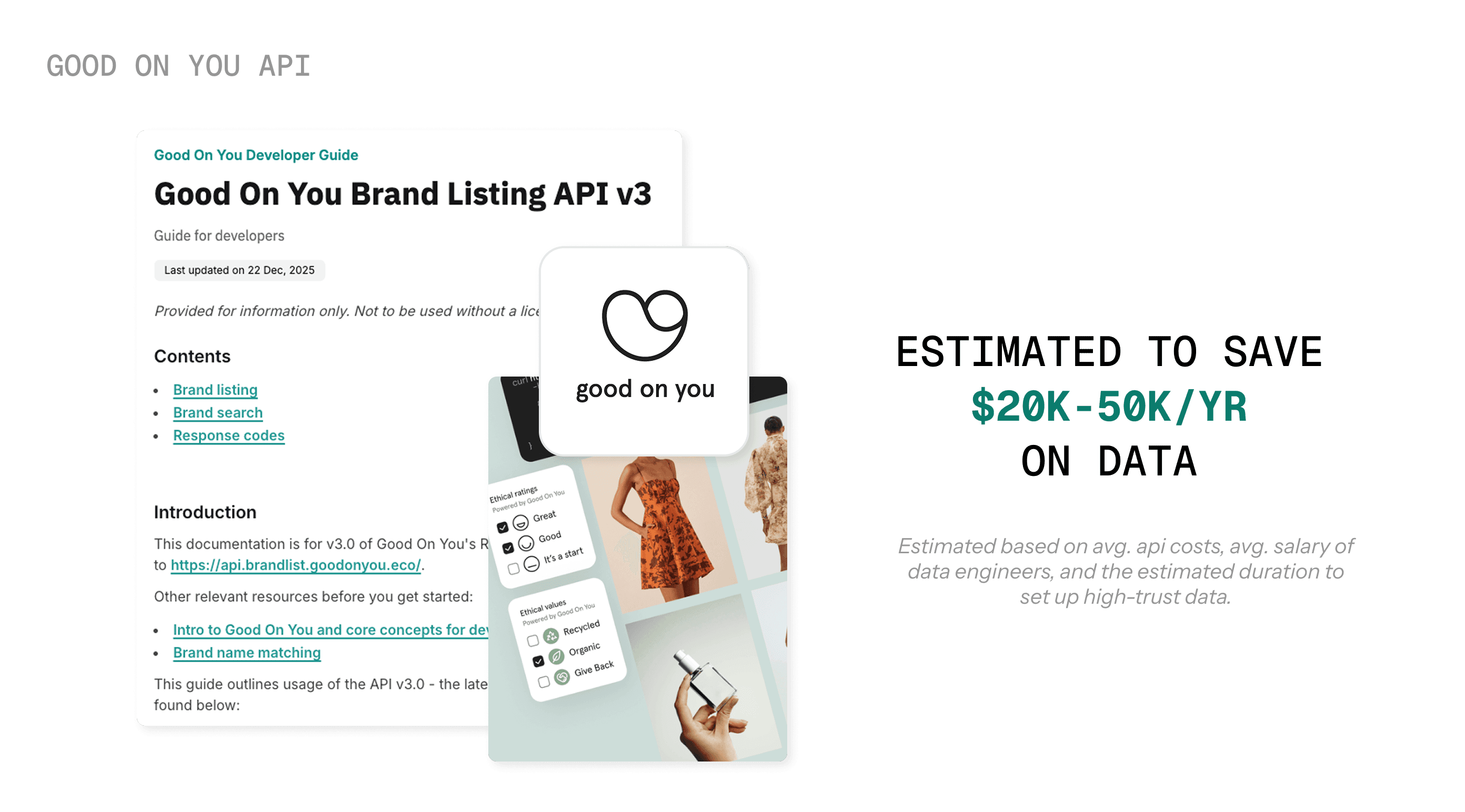
Fun fact: Good On You was the platform I researched during competitive analysis, but now is our potential partner!
On a side note, we can invest what we saved on data collection into customer lock-in strategies, like deals and promotions.
Outcomes
The final user test on the revised final hi-fi prototype revealed the following results:
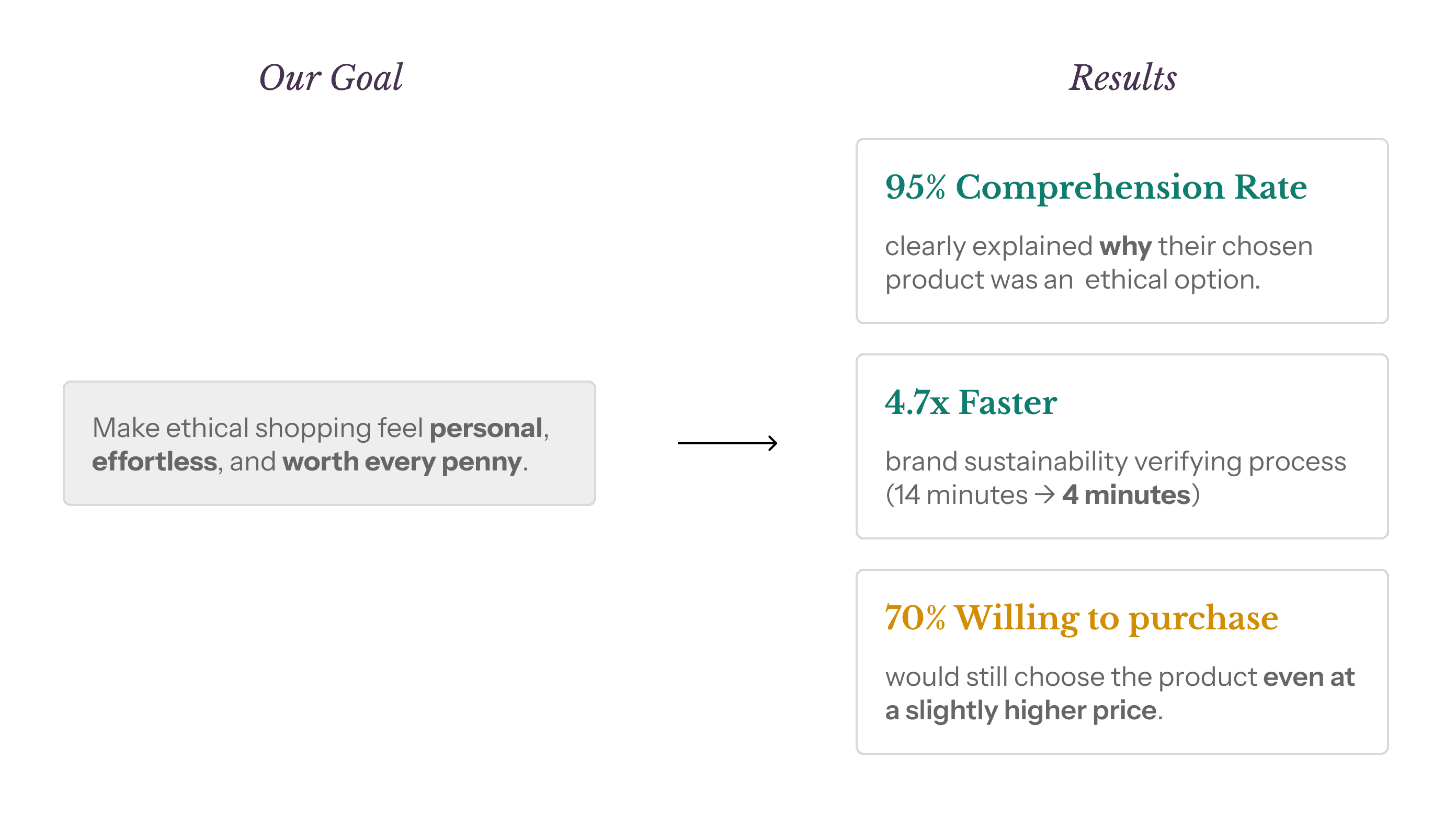
Insight: Premium price was an inevitable barrier.
Though Canopy justified the premium price of ethical products with trusted sustainability ratings, 25% users chose to wishlist items instead, because of the premium price tag.
Premium pricing remains an unavoidable tradeoff in ethical shopping.
Reflection
This was my first project setting up the design system using variables and components the first time - and was completely blown away. It shortened the design time by at least 30%, making me deliver the project days faster. I'm excited to dive into the world of design systems in my future projects.
AI is an incredible partner for exploration, but I've found it’s most effective when guided by a clear creative vision and specific project goals.